


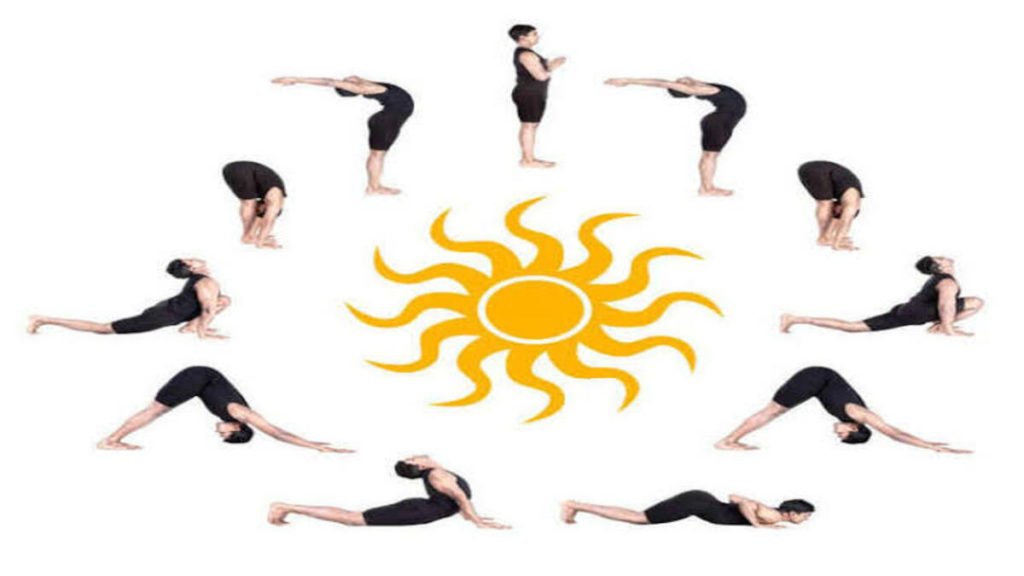
Yoga’s physical and mental health benefits are beneficial to people of all ages. Yoga may also be a vital ingredient of your therapy if you’re sick, recuperating from surgery, or living with a chronic condition. It can help you heal faster. The root word “Yuj” means “to yoke” or “to bind,” and the word “yoga”. The word itself has a variety of connotations, ranging from astrological conjunction to nuptials, with the common thread of connection running through them all. Surya Namaskar, also known as Salute to the Sun, is a yoga exercise that consists of a flow sequence of twelve beautifully related asanas.


Thus, help yourself learn Surya Namaskar with this Easy-to-follow Guide on Surya Namaskar Steps along with Podium School!
- What is Surya Namaskar?
- Trajectory of Sequences
- Why Perform Surya Namaskar in the Morning?
- Benefits Of Doing Surya Namaskar
- Step-by-step Surya Namaskar
- Warm Up Before Surya Namaskar
- How to Flow Through Surya Namaskar
- Tailor Sun Salutations According to Your Specific Needs
- Surya Namaskar?
- Final Thoughts
- FAQ Section
What is Surya Namaskar?


Sun Salutation, also known as Surya Namaskar, is a 12-pose yoga sequence. Surya Namaskar is regarded for having a tremendously good impact on the body and mind, in addition to being a fantastic cardiovascular workout. Doing Surya Namaskar early in the morning with an empty stomach is very beneficial. Each round of Sun Salutation has two sets, each with 12 yoga positions.
This series of poses goes back to over 2,500 years to a time when ancient nations valued the sun in high regard. Salutations were thought to be a real salute to the morning. It was a medium to prepare the body for all that would happen during the day.
Also There are numerous ways to perform Sun Salutation. For the best benefits, however, it is important to stick to one form and practise it on a daily basis. Surya Namaskar not only promotes overall health, but it also allows you to express appreciation to the sun for supporting life on our planet. Now, Let us look at the benefits of doing Surya Namaskar.
Trajectory of Sequences
Beginning and ending with Tadasana (Mountain Pose), this series of postures is essentially a set of prescribed actions. Therefore, The postures include a variety of stretches, forward folds, and backbends that develop heat and are done in a rhythmic cadence that matches your breath.
The start of an inhalation signals the start of your transition from one posture to the next, followed by a pause in both breath and body as you enter the pose, and the start of an exhale signals the start of your next transition.
Also, The rhythm of breath, movement, and stillness slowly falls into place. The sequence’s journey, like that of its namesake star, follows a predictable arc and is cyclical, making it easy to become lost in the repeating movements.
Why Perform Surya Namaskar in the Morning?
Sunrise is the best time to do Sun Salutations, according to science. Devas, or heavenly impulses, regulate the various portions of the human body, according to ancient Indian sages and saints.


Surya Namaskar might assist you in internalizing the sun as a part of your body’s system. Also, The design of the Surya Namaskar, with its twelve postures, might aid in the alignment of the twelve solar cycles with your bodily cycles.
The centre point of the human body is the solar plexus. It links to the Sun from behind the navel. Many yoga teachers advise doing Surya Namaskar early in the morning for this reason. This practice can help to strengthen the solar plexus if it is used consistently. Therefore, vigour, self-assurance, inventiveness, intuition, and mental talents all improve.
Benefits Of Doing Surya Namaskar

General Benefits
- Firstly, It aids with weight loss. Helps to strengthen muscles and joints. Improves skin tone. Supports the healthy functioning of the stomach and improves digestion. Aids in the treatment of insomnia. Helps in maintaining a regular menstrual cycle.
- It’s good for treating frozen shoulders. The abdominal muscles and the spinal cord are stretched. Massages the internal organs. Hips become more flexible. Helps to stimulate the Manipura Chakra.
- Improves the nerve system’s equilibrium. Assists in reducing blood sugar levels. Helps to regulate stress levels. Helps to maintain a healthy physique. Reduces constipation and improves digestion.
- Lastly, Removes stomach aches and pains. Ensures that the body maintains its equilibrium.
Surya Namaskar Benefits in Weight Loss


It is a strenuous physical activity that engages every muscle in the body. You may gradually increase the number of rounds while seeing the calories melt away. Bends and stretches help you lose weight in a more balanced manner.
Surya Namaskar Benefits in Hair Care


Surya Namaskar increases blood flow to the scalp, which helps to prevent hair loss. Increased blood circulation feeds the scalp and promotes hair growth. Also, Various positions might help with the greying of hair.
Benefits of Surya Namaskar for Children


- Firstly, With cutthroat competition everywhere, children are exposed to stress and anxiety from a young age. Surya Namaskar helps kids in calming their brains, improving focus, improving endurance. It helps reduce anxiety and restlessness, especially during examinations.
- Practicing it regularly also offers body strength and vigour. It also promotes muscle growth and makes the body more flexible.
- Lastly, Surya Namaskar may be practised regularly by children as young as five years old.
Helps in the Maintenance of Over-all Health


First, Surya Namaskar is helpful for the lungs and can help reduce the risk of TB. It can aid in the improvement of blood circulation, hence preventing high blood pressure and palpitation. Furthermore, it can repair any issues with the functioning of certain glands. It may surprise you, but it can help you live longer.
Step-by-step Surya Namaskar

When done at a rapid rhythm, the Sun Salutation can be a great cardiovascular workout. When yoga poses are performed at a slower speed, however, it may be incredibly soothing and introspective. Regardless, saluting the sun is a pleasurable experience in any case. With frequent practise, your body will undoubtedly stretch and become more flexible.
Here are the steps of Surya Namaskar that you should do every morning, along with some ideas on how to get deeper into the position. Therefore, Take a look at these!
| No. | Surya Namaskar Poses | Asna name in English |
| 1. | Tadasana | Mountain Pose |
| 2. | Hastauttanasana | Raised Arms Pose |
| 3. | Hasta Padasana | Hand to Foot Pose |
| 4. | Ashwa Sanchalanasana | Equestrian Pose |
| 5. | Dandasana | Stick Pose |
| 6. | Ashtanga Namaskara | Eight Parts Salute |
| 7. | Bhujangasana | Cobra Pose |
| 8. | Adho Mukha Svanasana | Downward Facing Dog Pose |
| 9. | Ashwa Sanchalanasana | Equestrian Pose |
| 10. | Hasta Padasana | Hand to Foot Pose |
| 11. | Hastauttanasana | Raised Arms Pose |
| 12. | Tadasana | Mountain Pose |
Begin with the Mountain Pose


- Firstly, Tadasana Namaskar is another name for this position. Firstly, stand tall and straight, hip-distance apart, with your feet firmly planted on the floor.
- Also, Balance your weight evenly on both feet. Let your hands dangle at your sides with the palms facing front and the fingers open, in a receiving position.
- Consequently, Bring your hands together or join your hands together in front of your chest in a prayer position.
- Lastly, Over your heart chakra, press the points of your thumbs into your sternum. Once you’re in mountain position, focus on establishing your centre by breathing slowly and steadily.


Raise Your Arms in an Upward Salute (Hastauttanasana)


- Take a deep breath in and raise your arms up and back.
- Keep in mind to keep your biceps as near to your ears as possible.
- Lastly, Make an attempt to extend your entire body from the heels to the tips of your fingers.
Move into a Standing Forward Bend Position (Hastapadasana)


- Firstly, exhale and bend forward at the hips while maintaining a straight back and legs. Bring your chest against your thighs and aim the crown of your head at the floor, if possible.
- Secondly, If you can’t reach the floor with your hands, rest them on a block. With your hands on the outsides of your feet, try to line up your fingers with your toes.
- Also, While in this stance, keep your back as straight as possible.
Equestrian pose – Ashwa Sanchalanasana


- Inhale deeply and extend your right leg as far as possible.
- Slowly glance up after bringing your right knee on the floor.
- Finally, make sure your left foot is exactly in the middle of the palms.
Dandasana (Stick pose)

- As you inhale, move your left leg back and align your entire body into a straight line accordingly.
- Stretch your legs straight behind you and curl your toes for a better posture.
- Maintain a straight and flat back by keeping your arms straight and shoulders precisely above your wrists.
- Lastly, Your hands and feet should be shoulder-width apart and hip-distance apart.
Ashtanga Namaskara (Salute with eight parts or points)


- Exhale slowly while lowering your knees to the floor. Slightly recline your hips, slip forward, and lay your chest and chin on the floor. Raise your backside a little. Also, Two hands, two feet, two knees, chest, and chin (eight body parts) should all contact the ground.
Bhujangasana (Cobra pose)


- In the pose, you have to lean forward and elevate your chest.
- Always remember to keep your elbows bent and fixed.
- Maintain a safe distance between your shoulders and your ears.
- Now slowly raise your head.
- Inhale and lift your chest upward with a moderate effort.
- Slowly breathe out or exhale and gently make an effort to push your navel down.
- Also, Tuck in your toes.
Adho Mukha Svanasana (Downward facing dog pose)


- Gently exhale out and pull your hips and tailbone up.
- Make an inverted V position by lowering your chest.
- Remember to keep your heels as close to the ground as possible.
Ashwa Sanchalanasana (Equestrian pose)

- Gently take a deep breath in and step your right foot forward between your palms.
- Bring your left knee all the way to the floor.
- Look up after pressing your hips down.
- Put your right foot in the precise between the two hands.
Hand to Foot Pose – Hasta Padasana

- Slowly and gently breathe out while stepping forward with your left foot.
- Maintain a firm grip on the ground with your palms.
- If you’re uncomfortable, you can bend your knees.
Raised Arms Pose- Hastauttanasana

- Inhale deeply and raise your spine.
- Raise your hands and bend your backwards a little.
- Make a small outward movement with your hips.
- Check if your biceps are parallel to your ears.
Standing Mountain pose – Tadasana


- Exhale and straighten your body first.
- Bring your arms to your sides.
- In this yoga position, try to relax and let your thoughts flow.
- Observe how the Sun salutations make you feel in your body.
Warm Up Before Surya Namaskar


Surya Namaskar was formerly thought to be the warm-up for yoga practice. Most vinyasa teachers still use Sun Salutations as a warm-up for more difficult sequences, but only after cuing students through many stretches first. If you have any kind of tightness, stretching before starting the sequence is a good idea, especially if you’re doing it early in the morning.
Begin with Balasana (Child’s Pose) for a few several breaths, then go on to Marjaryasana and Bitilasana (Cat and Cow), and finally Adho Mukha Svanasana (Downward-Facing Dog Pose). If your lower back is stiff, you’ll need a little extra persuading before feeling the bold backbend of Urdhva Mukha Svanasana (Upward-Facing Dog Pose), so spend several breaths in Bhujangasana (Cobra Pose).
How to Flow Through Surya Namaskar


Set your own pace, your own unique synchronisation of movement and stillness. If you can flow in such a way that each breath corresponds to one movement of your body, do so. Although it is always possible to spend a little extra time and linger in any given position, whether you just want to enjoy that stretch for a little longer or require a little more time to get into it. This is your training. Therefore, take responsibility for it.
And if you find yourself shifting from pose to pose and losing track of whether you should be breathing or exhaling, don’t worry, you won’t collapse if you change it up.
A brief cheat: In yoga, you normally elevate or expand your body as you inhale; as you exhale, you drop or release your body.
This series of postures can serve as a stand-alone practise or as a warm-up for a lengthier asana programme. Teachers often lead Sun Salutations in groups of five, but if you’re new to the practise, start with fewer. Perhaps even just one.
Tailor Sun Salutations According to Your Specific Needs
Given that the exact poses in Sun Salutations vary slightly between yoga traditions, there is precedent for modifying the sequence. Don’t be afraid to tweak it further to meet your specific requirements.
If You Tend To Rush
Have you ever caught yourself rushing through your day or practise, holding or quickening your breath? Instead, intentionally lengthen your breaths, especially when you exhale. Then, allow your movement to correspond to the rate of your breathing. Perhaps you stay in a pose for longer than a single breath and allow yourself to settle into the stretch.
Also, make a deliberate transition from one posture to the next. Make an effort not to rush through the in-between-poses sections.
If you Have Tight Hamstrings
You may find it difficult to move from Downward-Facing Dog to Low Lunge in a single step. Instead, take as many steps forward as necessary until your toes are in line with your fingertips. Alternately, you can come into Low Lunge by first lowering your opposite knee to the floor, then stepping your other foot forward between your hands and straightening your back knee.
Surya Namaskar?
Hold each pose for as long as you are comfortable in the beginning. As you practise, try to hold for a little longer and gradually increase your capacity. Holding yourself for a period of time that exceeds your threshold limit can result in injury and energy drain.
Final Thoughts
Enjoy your Surya Namaskar practise. Of course, some gentle warm-ups are required before practising. Perform your sun salutations in the east direction in the morning and in the west direction in the evening.
Many advantages include increased physical and mental strength, better control over your body, mental calmness, balanced energies, and inner peace. In addition to this, Surya Namaskar is a powerful technique for increasing mindfulness. With regular practise, awareness grows, forming a stronger connection between the body, breath, and consciousness. As a beginner, you can begin with 5 cycles per day and gradually increase to 11 cycles per day.
While performing your Salute to the Sun yoga sequences, remember to be grateful and smile. Most importantly, keep in mind that you must perform with grace, at a slow pace, and with awareness of your breath. Also, your breathing should be as natural as possible at all times.
For more such articles keep visiting our blog to keep yourself updated!
FAQ Section
After watching the video, try to imitate the Surya Namaskar posture. If you have back pain, joint pain, or weakness in your body, it is strongly advised that you practise the posture under the supervision of a trained yoga instructor.
The key to performing a good Sun Salutation is to give your all in every posture. Close your eyes and practise at a slow pace for a more in-depth experience.
Yes, doing sun salutations every day can provide you with a variety of health benefits such as a stronger spine, improved digestion, glowing skin, and a healthy weight.
Surya Namaskara uses all of the major joints in the body to move in the right direction, whereas walking/jogging mostly uses the lower extremities. Walking improves the functioning of the heart and lungs, while Surya Namaskara improves it even more.
The downward facing pose, Adho Mukha Svanasana, is one of the 12 poses we practise during the Surya Namaskar. It is a transitional resting pose that stimulates blood flow. As a result, there is an increase in the amount of oxygen reaching the scalp, which promotes hair growth.
Surya namaskar is said to be effective in the mornings because it revitalises your body, relieves sore muscles, and lifts your mood for the rest of the day. Yes, it can be done alongside gym workouts, but it is always preferable to do them after the routine.


